Borderline Personality Disorder (BPD) is often misunderstood. People living with BPD may experience emotions very intensely, struggle with feelings of rejection or abandonment, find relationships difficult to navigate, or have a hard time returning to a sense of calm once emotions become overwhelming.
Unfortunately, BPD also carries a great deal of stigma. Someone may have been described as “too emotional,” “difficult,” “dramatic,” or “attention-seeking” when, in reality, they may be experiencing genuine emotional distress and struggling to communicate what they need.
The important thing to know is that BPD is treatable, and meaningful improvement is possible.
What Can BPD Feel Like?
Everyone experiences BPD differently. For some people, emotions can feel as though they go from 0 to 100 very quickly. A disagreement, change in someone's tone of voice, delayed text message, or feeling that someone is pulling away may create an emotional response that feels much bigger than the situation appears from the outside.
Others may struggle with uncertainty about who they are, what they want, or how other people feel about them. Relationships can sometimes feel incredibly close and secure one moment and frightening or uncertain the next.
Some common experiences associated with BPD can include:
- Intense or rapidly changing emotions
- Strong sensitivity to rejection or perceived abandonment
- Difficulty trusting others or feeling secure in relationships
- Impulsive reactions when overwhelmed
- Feelings of emptiness
- Difficulty managing anger
- Uncertainty about identity or self-worth
- Seeing situations or relationships in very “all-or-nothing” ways
- Difficulty communicating needs during emotionally intense moments
Having some of these experiences does not automatically mean that someone has BPD. A proper diagnosis requires assessment by a qualified healthcare professional, and similar experiences can occur with trauma, anxiety, depression, ADHD, and other mental health concerns.
What Does Treatment for BPD Look Like?
Effective therapy for BPD is not about teaching someone to stop having emotions. Emotions serve an important purpose.
Instead, therapy can help you understand your emotions, recognize patterns, communicate your needs more effectively, and develop ways of responding that create fewer problems in your life and relationships.
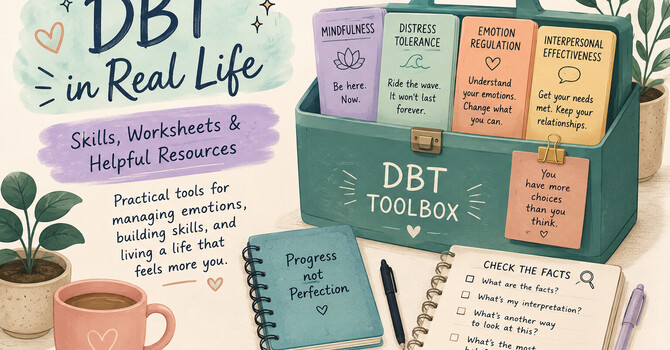
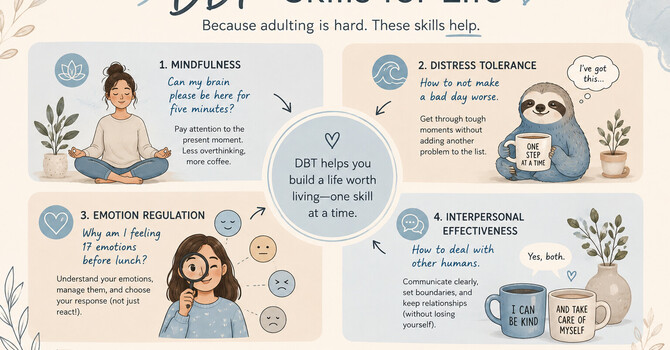
One of the best-known approaches for BPD is Dialectical Behaviour Therapy (DBT). DBT focuses on practical skills that can be used in everyday situations.
Emotional Regulation
When emotions become intense very quickly, it can be difficult to think clearly or decide what to do next.
Therapy can help you recognize emotional patterns and early warning signs before emotions become overwhelming. Over time, you can learn strategies for managing strong emotions without feeling as though you have to immediately act on them.
Distress Tolerance
Sometimes the goal isn't to immediately solve a difficult situation. Sometimes the first goal is simply getting through the moment without making the situation harder.
Distress-tolerance skills can help you manage emotionally intense situations while giving yourself enough time to decide what you actually want to do next.
Relationships and Communication
Relationships are often an important focus of BPD treatment.
Therapy may help you learn how to ask for reassurance, establish boundaries, manage conflict, express disappointment, and communicate your needs without damaging relationships that are important to you.
It can also help you recognize the difference between what you feel might be happening and what you know is happening.
For example, the thought:
"They haven't answered me. They must be angry with me."
can gradually become:
"I'm noticing that I'm worried they're angry with me because they haven't responded. I don't actually know why they haven't responded yet."
That small pause can create room for a very different response.
Understanding Your Patterns
Therapy can also involve exploring the patterns that repeatedly appear in your relationships and emotional life.
You might begin noticing:
Trigger → Thought → Emotion → Urge → Action → Consequence
Once you understand the pattern, you have more opportunities to interrupt it.
The goal isn't perfection. It's creating more choices between what you feel and what you do next.
Therapy Should Include Both Acceptance and Change
One of the central ideas behind DBT is that two things can be true at the same time.
Your emotions can make sense and you can learn different ways of responding to them.
You can accept yourself as you are today and work toward changing patterns that are hurting you.
You can understand why you developed certain coping strategies and recognize that those strategies may no longer be helping you.
Good therapy shouldn't make you feel ashamed for struggling. Instead, it should help you understand yourself while building practical skills for creating the life and relationships you want.
Progress Can Be Gradual
Recovery from BPD doesn't usually mean that difficult emotions disappear completely.
Instead, progress might look like noticing an emotional trigger earlier, taking time before responding to a message, recovering from an argument more quickly, communicating a need instead of expecting someone to guess it, setting a healthy boundary, or realizing that a difficult emotion will eventually pass.
Those changes may seem small individually, but over time they can completely change how someone experiences relationships, stress, and everyday life.
You Are More Than a Diagnosis
A diagnosis can provide language for understanding certain patterns, but it does not describe an entire person.
People living with BPD can have meaningful relationships, successful careers, strong friendships, families, and fulfilling lives. With appropriate treatment, support, and practice, emotional patterns that once felt impossible to manage can become much more manageable.
Therapy can provide a space to understand those patterns without judgment while developing practical strategies that work in everyday life.
Change is possible—and you don't have to have everything figured out before asking for support.

Diana Rochester
Contact Me